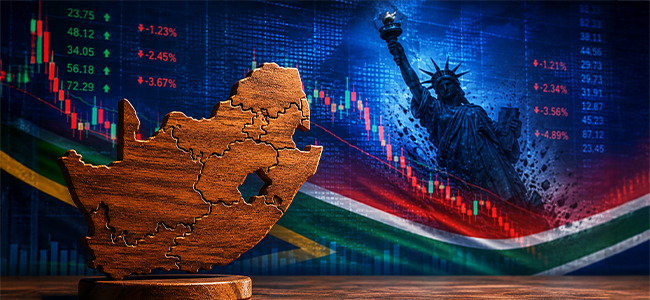
Gold broke through the psychologically significant $4 000-per-ounce barrier, surging over 25% and trading above $4 300 in late October. This rally represents a fundamental shift in how global investors view wealth preservation in an increasingly uncertain world.
The gold price’s record rally has been driven by a perfect storm of factors: President Trump’s aggressive trade policies creating global uncertainty, central banks worldwide still accumulating gold at near-record levels, and expectations of further interest rate cuts by the US Federal Reserve.
The rand-gold sweet spot for SA investors
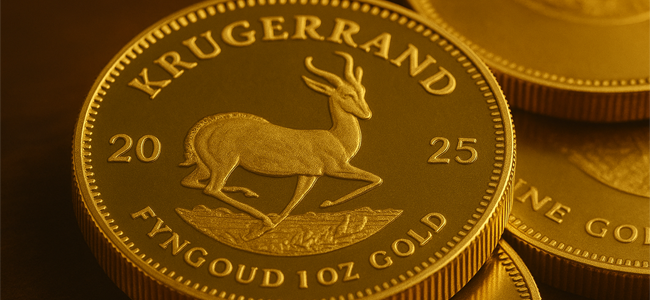
South African investors are particular beneficiaries of a strong rand and gold price. A one-ounce Krugerrand now trades between R63 000 and R80 000. South African gold mining companies benefit from high dollar gold prices while the stronger rand helps contain input costs. As a result, they are experiencing improved margins and have contributed materially to the JSE’s 30%-plus rally this year.
For local investors, gold acts as a rand hedge in periods of currency weakness and a safe haven during international instability. South Africa offers a range of quality investment options, from physical Krugerrands to mining stocks, unit trusts, and ETFs, providing multiple ways to gain exposure to gold.
Wall Street is still bullish on the yellow metal
Major investment banks have revised their gold forecasts upward, with some predicting prices that seemed fanciful just a year ago. Goldman Sachs projects gold will reach $4 900 by 2026, driven by what they call “conviction buying” from central banks. Meanwhile, Bank of America maintains one of the most bullish outlooks at $4 400 to $5 000.
Even the World Gold Council’s projections suggest gold will hold near record levels. Most notably, legendary investor Ray Dalio now recommends that investors allocate as much as 15% of their portfolios to gold, comparing today’s environment to the global roller coaster ride in the early 1970s.
However, not everyone is convinced that gold can maintain these historic levels. BNY Wealth Management warns that gold has become increasingly volatile, with daily swings that have exceeded 6% at times.
The bottom line
While gold’s current price of over $4 000 does reflect significant structural changes in the global financial system, it’s crucial investors remember that gold remains volatile, doesn’t generate income, and should be part of a diversified portfolio rather than a standalone bet.
If you have any questions about how all of this affects your investment portfolio, please give us a ring.
Jason Yutar: +27 83 415 9603 or
Zaheera Mohammed: +27 82 775 1898
Disclaimer: The information provided herein should not be used or relied on as professional advice. No liability can be accepted for any errors or omissions nor for any loss or damage arising from reliance upon any information herein. Always contact us for specific and detailed advice.
© FinDotNews