“We all die. The goal isn’t to live forever, the goal is to create something that will.” (Chuck Palahniuk)
In South Africa, our law hasn’t quite kept pace with the rapid digitisation of our assets. This creates a “digital ghost” problem: accounts that continue to exist, draw fees, or hold value long after the owner has passed, simply because no one knows they exist (worst case), or how to access them (not much better).
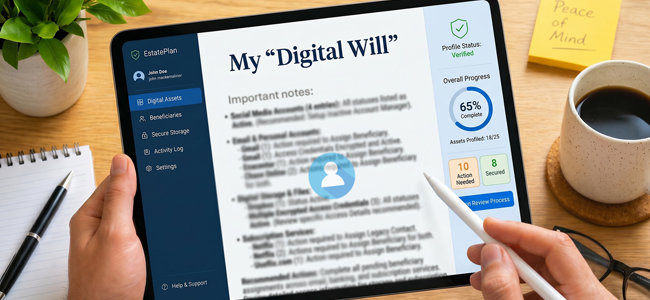
This is why it’s important to leave a “digital will” – an easily accessible folder where your heirs can find important information they need to find your digital assets.
Importantly, this doesn’t replace your actual will. To avoid complications, always ensure that your formal will (“Last Will and Testament”) is written on paper and signed by two witnesses. But there are important reasons to have an additional “digital will” that covers your wealth in the cloud.
An important distinction
The first rule of digital estate planning is to never put your passwords in your physical will. Once a person passes away, their will becomes a public document filed at the Master of the High Court. Listing your banking PINs or Bitcoin “seed phrases” in your will is an invitation for public theft.
Instead, consider appointing a “digital executor” in your will. This is not a formal legal position, but is simply someone tech-savvy who you trust and has access to a separate, secure digital folder. This is a document that contains the “map” to your digital life and is kept in a secure location, such as a fireproof safe or an encrypted “digital vault” with emergency access enabled.
Banking and crypto
The most urgent items in your digital folder are those with direct monetary value. In South Africa, banks move quickly to freeze accounts once a death is reported. You need to be prepared for this, by considering the following:
- Banking & investment apps: Your formal executor needs an inventory of where you hold money. This includes fintech apps like EasyEquities, Luno, or TymeBank. Even if they don’t have the password, knowing the account exists allows the executor to provide the necessary letters of executorship to the institution.
- Cryptocurrency: This is the highest-risk category. If you hold crypto on a hardware wallet or via a private key, and you die without sharing the access code, those assets are gone forever. No bank or court can recover them. Provide clear instructions on where the “seed phrase” is hidden.
- The 2FA Trap: Most financial apps use Two-Factor Authentication (2FA) linked to your smartphone. If your family cannot unlock your phone, they cannot receive the SMS or app-based codes required to move funds. Your phone’s PIN is, therefore, the master key to your estate and should be noted somewhere safe.
- “Hidden wealth”: It’s also important not to overlook loyalty programmes. Programmes like Discovery Miles, eBucks, and uCount often hold thousands of rands in value. Similarly, airline rewards like SAA Voyager or Avios can often be transferred to a beneficiary if the airline is notified within a specific timeframe. Without a record of these accounts, this “hidden wealth” simply expires.
Memories in the cloud
While money is the low-hanging fruit, don’t overlook the emotional side of your digital legacy. For many, a lifetime of family photos is stored exclusively on iCloud or Google Photos. If you don’t share your login credentials or set up a “Legacy Contact” (a feature both Apple and Google now offer), your family may have to face a traumatic and often unsuccessful legal battle with international tech giants to retrieve your memories.
Also consider your social media presence. Do you want your Facebook profile deleted, or would you prefer it to be memorialised? Including these wishes in your digital folder saves your loved ones from making difficult guesses during a time of grief.
Practical steps
- Create a spreadsheet of every digital account you use, from Netflix to your SARS eFiling.
- Use a password service that allows you to designate an “emergency contact” who can request access to your vault, which is granted after a waiting period you define.
- If you prefer a physical folder, ensure it is stored with your attorney or in a home safe.
- Draft a simple document explaining how you wish to dispose of your digital assets. While not always legally binding in the same way as a will, it provides a vital roadmap for your executor and the Master of the High Court.
In a country where the Protection of Personal Information Act (POPIA) strictly guards data, your family will face significant hurdles if you haven’t paved the way for them. A digital folder is more than just a list of passwords; it is a final act of care for your family, ensuring that your digital footprint is managed with dignity and that your hard-earned assets – both financial and sentimental – end up in the right hands.
Jason Yutar: +27 83 415 9603 or
Zaheera Mohammed: +27 82 775 1898
Disclaimer: The information provided herein should not be used or relied on as professional advice. No liability can be accepted for any errors or omissions nor for any loss or damage arising from reliance upon any information herein. Always contact us for specific and detailed advice.
© FinDotNews